Hypothalamus in a Hat
6 days til CUBATOOTH...

An audio accompaniment to this piece is available at the end.
1.
I’m working on a nonfiction book proposal and one bit of research has been watching The Offer on Paramount+. The hypothetical book I’m working on would be a lot like The Offer which is a ten-episode series, told from the view of producer AL Ruddy, about the hurdles and crises that surrounded the making of The Godfather.
It was a delight to watch the show because once a month I receive an email telling me I have paid $6 or $9 or $11 for the Paramount+ subscription that I have not used even once but that I am sure I have cancelled twice. Like dental insurance I was happy and upset to find a use for it.
Mario Puzo wrote The Godfather because his first two literary novels about the Italian-American immigrant experience kinda flopped and he claimed he could write a bestseller whenever he wanted to. Finally he decided he wanted to.
That’s the version he tells. The show makes it sound a little dicier. That he owed money to shady characters. I’m not sure where they got that information but maybe they pieced it together from his out-of-print essay collection called The Godfather Papers which is terrific for the duration of roughly two essays:
I wrote three novels. Two of them were critical successes but I didn’t make much money. The third novel, not as good as the others, made me rich. And free at last. Or so I thought.
He’s tryna be cryptic there but no: he wrote the novel in a Long Island basement with a pool table in it, occasionally scrambling off his desk and staggering out to scream at his three kids to shut the fuck up cuz he’s writing “a bestseller!”
It made him a millionaire.
You’re free, Mario.
2.
The Godfather is a romantic look at organized crime, as everyone says, and The Offer suggests that first-time producer Al Ruddy needed to make it that way because the mob was leaning on him to stop the production.
They said it was defamatory.
Really they were just getting leaned-on by Frank Sinatra.
Sinatra said it was defamatory.
Really he was just pissed that Puzo leaned into rumors about his mob connections.
James Kaplan wrote about those rumors in the first of his two-volume Sinatra biography, The Voice. He also writes about the fact that Sinatra had a condition called “macrophallus” and that his mother Natalina Maria Vittoria Garaventa had to sew two pair of underwear together to keep him contained, citing Chaucer in one famous interview saying a big cock, like murder, “will out.”
3.
The rumors were these:
Sinatra’s singing career was on the ropes in the 1950s. He was depressed from a break up and very skinny. Everybody saw that he was a perfect fit for this star-making role in From Here to Eternity. So he grabbed his blue eyes and his rib cage and his giant cock and ran to Columbia Pictures. He said, “Y’gotta put me in that piksha!” They said no. He called the mob. They did something violent, He got the part. (This is what he alleges The Godfather is allegedly alleging.)
1942 Sinatra was under contract with bandleader Tommy Dorsey. The contract said that this talented kid would give 33.3% of his earnings to Tommy Dorsey for life; plus 10% for Dorsey’s agent. Before taxes. And these were the years of a progressive wartime tax.
A detail that surprised me from the Kaplan biography is that Frank Sinatra was suicidal after Ava Gardner dumped him.
Philip Roth claimed to have slept with Ava Gardner as well but do you know what he did for a living? He made shit up.
4.
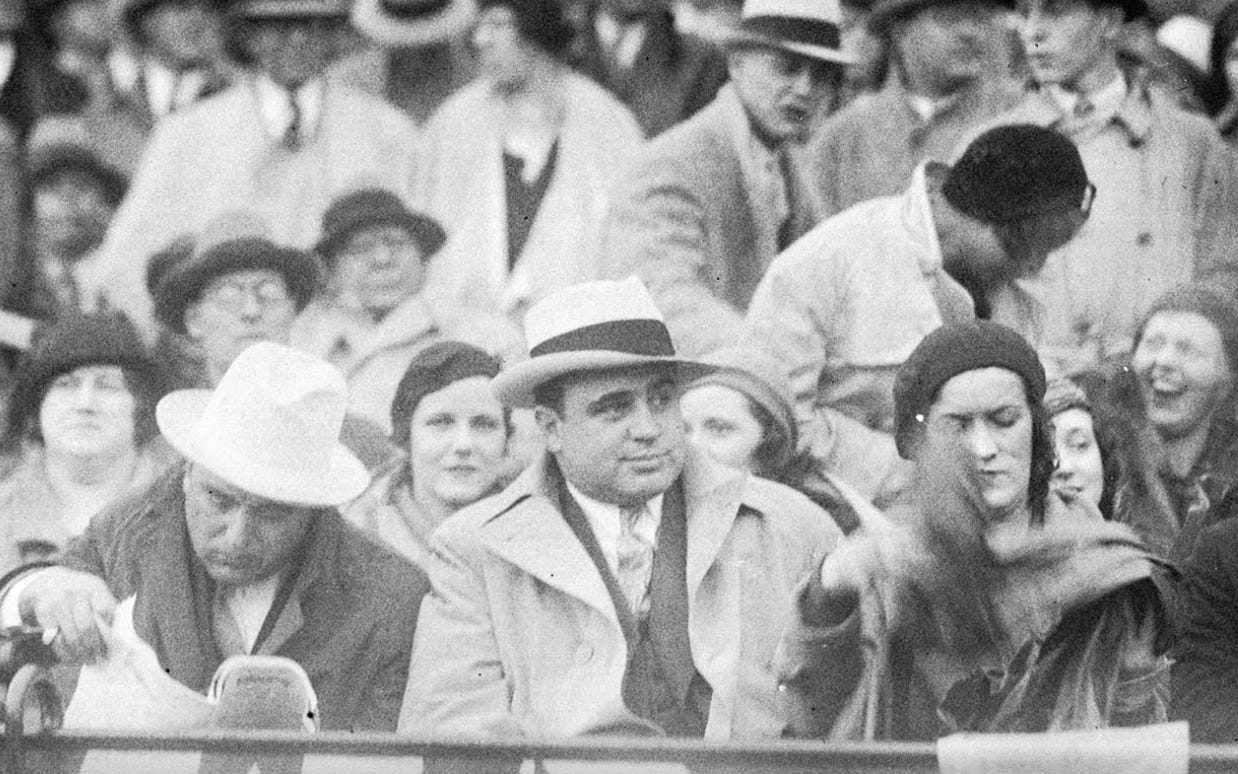
For the past few years I’ve been writing a book about Prohibition called Cubatooth (comes out next week!) and as part of my research I read seven books about organized crime and depending how you define “biography” I would say that three, four, maybe five of them were biographies of Alphonse Capone aka “Al Brown,” as his business card said, “Secondhand Furniture Dealer.”
Books about Al Capone tend to be one of two things: they are either very short, or they are about something other than Al Capone.
I kept reading these biographies and walking away with a very foggy notion of who Capone was even though he was the farthest possible thing from a cipher. Then I read Five Families by Selwyn Raab:
[Capone’s] downfall had no impact on the New York bosses except as a warning about tax-evasion investigations . . . Capone made a fortune from his rackets, but his reputation among the shadowy New York godfathers was diminished by his penchant for publicity. His fame was greater than his actual influence and power. At the end, Capone’s exaggerated underworld importance became a fatal liability for him.
5.
Like with Ronald Reagan 60 years later it remains unclear when syphilis began eating Al Capone’s brain because, even when behaviors became flag-wrapped in a spectrum of reds, lifelong friends would later attest that he was always kinda “like that”: aloof, ill-tempered, mercurial, forgetful, selling weapons to people who should not have them.
This is my judgement: Al Capone was not an interesting person. His favorite pastimes were fishing and horse races but he also enjoyed simpler pleasures like cocaine and screaming. Al Capone famously said, “You can get much further with a kind word and a gun than you can with a kind word alone.” The reason this made sense to Al Capone is that he never said a kind word. Or if he did say a kind word he was also holding a gun, and you were meant to understand, “Hey I don’t think he means that!”
I can think of one situation where Al Capone’s dictum makes a general kind of sense:
Tommy Dorsey.
6.
I began to pity these biographers. It is much easier to sell a book about Al Capone than to write one and he might be the only person on Earth about whom this is true.
Many biographers, realizing Al Capone is nothing but a hypothalamus1 in a hat, try writing about the broader criminal scene. This does not work, either. In researching a violent gang war the casual researcher will stumble upon eyewitness testimony of how the citywide shootout started.
The researcher cracks his knuckles thinking he has hit a jackpot.
The testimony will say that Capone and whoever, Don Corleone, got into a heated argument, and then as the biographer you think, “Oh wow this’ll be great I get to dramatize the argument!” and then you keep going through the deposition or whatever and it turns out one guy said to the other guy, “Hey fuck you,” and the other guy said, “No fuck you.”
Eleven murders later the axis of east-coast bootlegging tilts, and pulls the whole economy with it.
It was just so stupid.
7.
Godfather director Francis Ford Coppola caught hell for romanticizing gangsters. Then he accidentally ate a powerful weed cookie right before walking on stage and delivering an Oscar. Fortunately the footage is preserved.
I do think that they romanticized gangsters but not just in the sense that the Corleones made to seem cool or chivalric or anything — the truth is that a lot of these figures were just not interesting, as people; they were interesting as weather systems that the rest of society had to contend with.
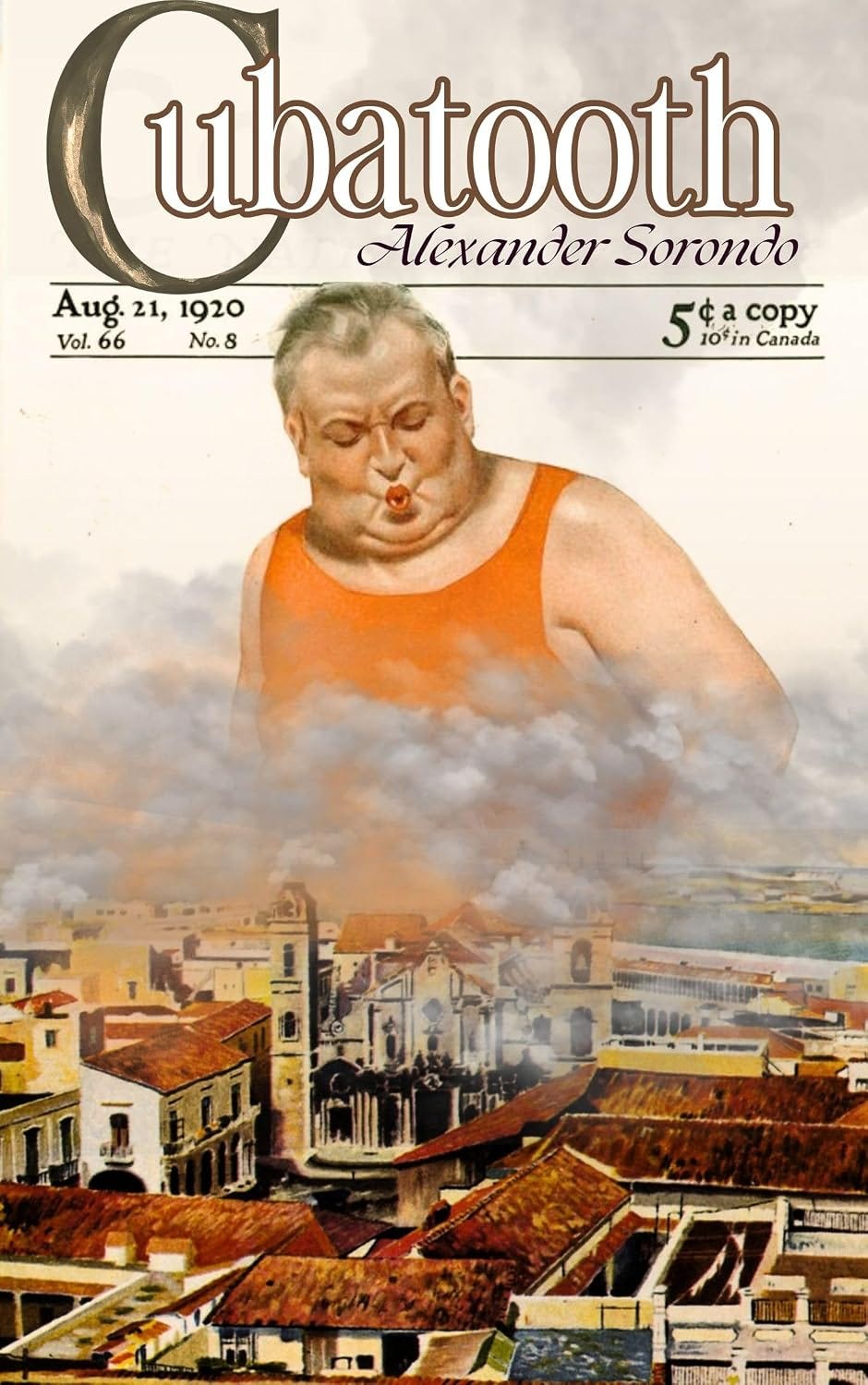
And that’s what I explore in my new novel, Cubatooth, whose digital copy I’d be real grateful if you pre-ordered, for $4.99, right here:
PS
Yesterday’s attempt to provide an actual voiceover was such a digressive mess that today’s audio component is just a riff on the topics at hand.
Please Note: There’s some chafing and bumping on the lav mic for the first five minutes. I don’t know what I was doing but I’ll be more careful tomorrow.
“a key region of the brain involved in controlling appetite” — fuckin Cambridge
I've pretty much memorized the GF movies. The first two. The third one was such a disappointment. Unrealistic expectations.
Looking forward to reading CUBATOOTH!
Buddy, you're in rare form on this one. Great stuff.